People are laughing because AI has started replacing software engineers, designers, writers, customer-support agents, and many other professionals.
But they are missing the terrifying part:
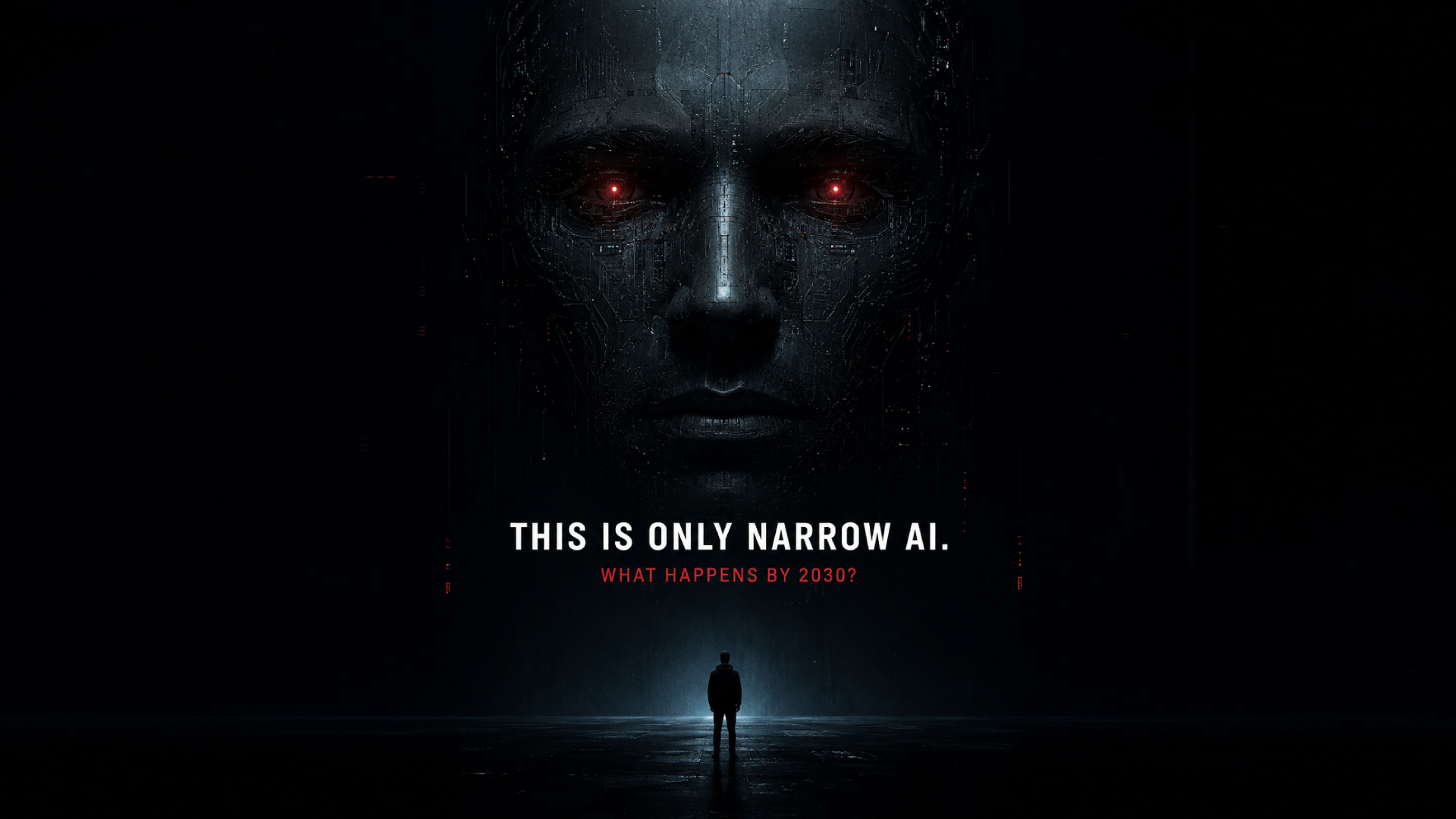
This is only Narrow AI.
We have not yet achieved Artificial General Intelligence—and we are definitely not at Artificial Superintelligence. Yet today’s AI can already write code, create videos, design websites, analyze documents, operate machines, and complete in minutes what once required an entire team. Now imagine AGI arriving before 2030.
An AGI wouldn’t simply follow prompts. It could potentially learn almost any profession, operate continuously, manage thousands of AI agents, and improve its abilities at a speed humans could never match. Companies wouldn’t just replace individual employees they could replace entire departments.
Software engineers.
Accountants.
Lawyers.
Designers.
Teachers.
Doctors.
Managers.
Drivers.
Factory workers.
First, AI could automate intellectual work. Then, combined with advanced robotics, it could begin replacing physical labour too. Dr. Roman Yampolskiy has warned of an extreme scenario in which AI could cause unemployment levels as high as 99% by 2030. This is a prediction not a certainty but it forces us to confront an uncomfortable question:
What happens to a society where human labour is no longer economically valuable?
How will people earn money?
Who will own the AI systems?
Will governments provide universal basic income?
Will wealth become concentrated among a tiny group of companies?
And what will give people purpose when their education, experience, and careers are no longer needed?
In the near term, some of the more protected jobs may include:
• Electricians, plumbers, technicians and emergency workers
• Nurses, caregivers, therapists and counsellors
• Skilled trades requiring unpredictable physical work
• Leadership roles requiring trust and legal responsibility
• Cybersecurity, robotics and AI-safety specialists
• Human-made art, entertainment and luxury craftsmanship
But if genuine Superintelligence arrives—an intelligence better than every human in virtually every field—then no job based purely on skill or knowledge is guaranteed to remain safe.
The remaining human jobs may survive only because people legally require a human or simply prefer human contact.
Today, you may be laughing because AI replaced someone else.
By 2030, you may discover that your degree, experience, profession and “secure career” cannot compete with something smarter, faster, cheaper and available every second of every day.
The most frightening possibility is not that AI will work for us. It is that the world may no longer need our work at all.